
(Take the Rams ATS Thursday night, and don’t look back)
Boy did I pick a good week to not make picks, eh?

Rather than do a typical “stock-up, stock-down” week to week reaction post, and since our democracy will be fast crumbling to shit resulting in an indefinite period of civil unrest, let’s take a step back from the week-to-week world, and re-establish some of my tenets for analyzing the sport.
The “Yes, Sir!” Quarterback
In my eyes, there are two ways to establish yourself in the NFL as a starting quarterback: 1) Make plays to win games, or 2) Do everything your head coach tells you exactly to script to service his ego regardless if you win games or not. Keep foremost in your mind that the NFL is run, critiqued, and analyzed by ego-driven men, and men love hearing about themselves, seeking confirmation bias to their professional grave to see their numbers add up in the process.
This league, especially with the spread offense reducing the magnitude of adjustment from collegiate to professional, is replete with quarterbacks who follow coaching scripts to make pretty stat lines. Completion percentage across the league has gone up, interceptions have gone down, and the product has been the least watchable it’s been in my lifetime. That’s not a coincidence. Head coaches have taken the revolutionary brilliance of Bill Walsh and dry-humped it into the ground with the spread by sloppily speeding it up rather than meticulously working the plays to perfection. In an era where you have limited padded practices, this is inexcusable. Walsh would roll in his grave watching how his concepts are used today in a league that polices its nastiest hits from the middle of the field. The check-down has become the handoff, and a quarterback that makes his hay completing them should be viewed equivalent to someone who hands it off as often.
The sheer volume of completed passes in this fashion (jet sweeps, bubble screens, rub routes within 1 yard from scrimmage) inflate many of these completion statistics, and also does not account for variance in style. This is where Bill Belichick clobbers the field with his situational football planning. These minimal risk completions dissolve into the pool like chlorine, making it safe to swim in, unsafe to swallow. Catch my drift? The quarterback’s job is not to keep you safe, rather it is to pull you out of the fire. Consistent play is of course desired, but what will put your team over the top under center is a guy you know can make intermediate throws to take the field in chunks to make up a deficit. You can basically coach/script the rest. Do not hammer on stat lines alone to prove your point on your favorite passer, or you will find yourself in love with a Yes-Sir quarterback.

Or worse, pay one nearly $30,000,000 a year guaranteed.
Kirk Cousins has a 65.6% career completion percentage, a 94.0 career rating, 106-57 TD to INT ratio. He also has won only 27 of his 60 career starts and never led a team to the playoffs. The closest he has ever come to the postseason is his near-superhuman 2016 season, where he threw for over 4900 yards, 25 TDs, and a career-high 97.2 rating. Why didn’t he make the playoffs? Well, let’s go there:
If Kirk Cousins was worth the paper his money is printed on, a Week 17 win-and-in home game against a 13 point effort from a team with nothing to play for is one you should have no problem gutting out to win. Cousins had it served to him on a plate with 2 minutes and the length of the field to get within field goal range (NOT a TD, mind you, field goal range).
I’m not even asking him to be aggressive. I’m asking him to check it down to the back a bunch of times and hit some medium distance out routes, and do ANYTHING other than what he does in this video: a “late middle” throw under pressure to give Dominique Rodgers-Cromartie his second interception of the game (cementing his All-Pro bid that year) and not only blow winning the game but pissing the season away altogether with a 3 point loss. Unforgivable.
I would have sent him packing after that game alone, much less franchise him another season. You like that? Yes sir, I sure do if it’s a Week 7 game against Jameis Winston. When I need the field managed, taken in chunks, and played situationally to win a Week 17 game at home to get into the playoffs, I get the above result. All the proof I ever needed to know he will never win a big game in his life. He couldn’t gut it out because he has no guts. He played within himself to create a pretty stat line, and couldn’t do a thing when the situation forced him out of that comfort zone.
Kirk Cousins, in my eyes, is the penultimate Yes-sir quarterback, and in an uncharacteristic move for the ages, the Redskins were absolutely right not to pay him. This is different from a “game-manager” QB. I hate the word “game-manager”. Every quarterback has to minimize mistakes, manage personnel, and lead. A true franchise quarterback will both manage the game when things go right and deodorize it when things go wrong. When things didn’t go right Week 17 in Washington two years ago, Kirk couldn’t make even the most basic of throws to set up a game-tying field goal, and his season ended when it shouldn’t have.
In Minnesota on Sunday, things could not have gone worse than they did in the first half hosting the Bills. Clearly, no one was expecting the Vikings, one of the Super Bowl favorites, to make anything other than quick work of the lowly Bills and their rookie quarterback Josh Allen. Alas, if you want to make God laugh, tell him your plans. The game got out of hand early when the young Allen, clearly devoid of polish, threw his coach’s cautions to the wind and his raw athleticism toward his opponent, playing outside of the confines of conventional offense to make plays like he knew he could. Was it an injury risk? Sure. Was he aided by a few scripted misdirection plays by his coaching staff? Sure. Was it sustainable? Of course not. Josh Allen will have some horrendous days against quality teams this year, but in this game, they very much understood the situation they were in and acted accordingly.
This win was no fluke. The Bills declared as heavy underdogs that they were willing to risk life and limb to establish an early lead, scoring on their opening drive and blitzing Cousins early to force an early strip sack and a resultant field goal. Cousins had no answer, as the game was off script. As one of the highest paid players in the league, with an armamentarium of offensive weapons, one of the best head coaches in the league, and home-field advantage, Cousins had no plan B. Yes-sir quarterbacks give their coaches validation by running their offense to plan in practice and unpressured situations but reveal their true colors when you need them to come back from down two scores in the fourth to steal a game in the hurry-up.
This is not to say, of course, that the Vikings were guaranteed to win this or any game this season, but the comprehensive lack of fight he showed on a highly talented and well-coached team (0 points and 92 yards of offense through three quarters despite finishing 40/55) in a game that got away from them early confirmed for me much of what I thought about him. The Vikings signed Cousins to get them over the top, and yesterday is proof positive that he’s exactly the kind of quarterback that won’t. A playmaking quarterback would have done something in the first 3 quarters of that game behind good protection to show you he has line checks to go to get back in rhythm. Cousins had nothing with a Super Bowl favorite at home, Allen had it all on arguably the league’s worst team on the road. I can’t think of a better game to showcase how one style of play wins and the other doesn’t.
The Bully Team

Physicality is obviously paramount in football, and it’s easy to fall in love with a team that punches its opponents in the mouth. Football is a game, if nothing else, of physical imposition of the will. An “old school” approach tickles the testosterone and arouses the blood of analysts who played in a bygone era, before Paul Brown and Bill Walsh innovated the modern passing game. While a “ground and pound” approach (tickled yet?) does cut down on turnovers and wears teams out in the regular season, it is overtly and decidedly one-dimensional. It overpowers teams of lesser innate talent and organization and gives the superficial appearance of superiority.
I dub these bully teams, not only in how they approach their opponents but in why they don’t win championships. Against quality opponents in the playoffs, this disparity shrinks big time. Essentially, the bully team is a good team until someone stands up to them, matching their physicality in the trenches and forcing them to win with something more than brute force.
Several bully teams have caught our eye in the past few years: The 2008 Giants, 2008 Titans, 2011 Niners, 2014 Cowboys, 2016 Cowboys, but the classical and most successful recent example of this were the 2015 Carolina Panthers, a 15-1 powerhouse with a throttling defense and a smash-mouth offense that garnered an MVP award to its quarterback, came startlingly close to being our second 16-0 team, and bulldozed Seattle and Arizona teams in the playoffs that were far from pushovers. Carolina was favored in the Super Bowl against Peyton Manning’s Broncos, and on paper rightfully so. Peyton Manning, even in his statistical renaissance, was deemed to lack the physical prowess to make throws against the speed of Carolina’s defense. He appeared ripe to have another disaster on the big stage as he did two years prior against the Seahawks. I picked Denver without blinking.
The first half of a Super Bowl is a terrible time to find out you don’t have a plan B. Denver’s defense matched Carolina’s physicality, and Super Bowl MVP Von Miller immediately disrupted the game with his speed, stripping Newton in the first quarter with Malik Jackson immediately falling on the loose ball for an early touchdown. To this date, and only in terms of speed, Miller’s performance in that game is the closest I’ve seen to Lawrence Taylor since he retired. Bully teams don’t like getting punched in the mouth early, and down 10-0 early weren’t equipped to take the field in chunks to get it back without their power running game to fake off of it. Despite only 191 yards of total offense, the Broncos handily won 24-10 because they had two plans (shut down defense, Peyton in the shotgun) where one worked and Carolina had one plan that didn’t. Rarely are big games that simple to dissect.
The Myth of Thunder and Lightning

Just as a bully team relies solely on physicality, no team wants to rely on a single particular skill entirely to get by. This is especially true of the backfield, where versatility is at a premium, and it’s easy to suggest that a team with two backs of different skill sets can “do it all” and be the basis for a productive offense. The original “thunder and lightning” concept came with the Super Bowl Buccaneers’ Mike Alstott and Warrick Dunn, and it only took one look at the pair to know who got which nickname. “The A-train” wore the now antiquated “neck roll” pads as a fullback and had a bruising style to boot, and Dunn’s slight 5-9 180-pound build screamed agility. Teams that sought to emulate this looked for backs with similar measurables and failed often.
Why is this? Because thunder and lightning is a myth. The physical stature of a back, as Warrick Dunn proved in a career with 15,306 yards from scrimmage, takes a back seat to their skill set. The “thunder and lightning” concept is not about complementary skills from different body types, but identical and complete skill sets from two different body types. While Alstott and Dunn could not be more physically disparate from one another, and certainly things like short yardage favored Alstott, there was nothing either back couldn’t do to be kept out of formation. Alstott was a prohibitively underrated pass catcher, and Dunn weaved in the box inside as well as any back in his generation. It’s very physically taxing on muscle memory to ask defenders to brace themselves for Alstott one play and chase Dunn the next, especially when you can’t predict how either will be used.
Offensive football is about enabling yourself to have a wide variety of formations with a single personnel package. It’s why the Giants failed being in 3WR-1TE-1RB almost 90% of the time despite their talent. You line ’em up, plan your mismatches, get to work. The Bucs were fantastic at this because of Alstott’s versatility as a runner, blocker, and pass catcher. Dunn and Alstott could be on the field at the same time, and either back could be counted on for the run or pass. When a defense has this much to account for, it’s difficult to defend, especially after getting hit by the A-train.
Once a player’s presence or place in the formation renders your offense predictable based on what they can’t do, that back is useless, which is why the Bears’ season hinges not just on the development of their quarterback, but on the utilization of their dynamic young backfield of Jordan Howard and Tarik Cohen. Cohen makes for better TV with his jitterbug style and special teams duties, but Howard is the guy that catches my eyes more often during the game. He has the appearance of a bruiser but pleasantly surprises in versatility and vision. The Bears’ offense falls off a cliff once the opening game script is over, and while they are not bereft of talent on the outside, they are predictable. You know Trey Burton isn’t blocking anyone. You know Taylor Gabriel is gonna live in the slot. You know Allen Robinson is going to the sticks and cutting. Chicago needs to build more pass plays to Howard and more designed inside runs for Cohen, even something as simple as a base handoff in a 4 WR formation, to keep teams off guard. The backs make the spread. Not only will it make their plays less predictable, but it will set up 1 on 1 matchups on the outside.
4th Down Dick-Swinging
We all get caught up in trends. I bought a $900 leather jacket a few years ago: essentially the punk band esthetic I couldn’t afford when I was in one, and I’m currently wearing it into the ground as we speak (don’t worry, I have my Adidas track jackets ready to go immediately when I’m too old for the leather). Nowhere does Bill Belichick distance himself from the pack and everyone reacting to the pack on Twitter more than his practice of situational football on 4th down.
Repeat after me until you’re “on to Cincinnati”-blue in the face: Football is situational before it is statistical. Every game is precious, and thus the key to good decision making is avoiding the worst possible things that can happen to you before systematically taking calculated risks. Nothing drives me nuts in football analysis faster than the guy who makes a statistical case for why you should never punt, or worse, the inevitable tweeted wave of second-guessing that comes based on the result rather than the decision.
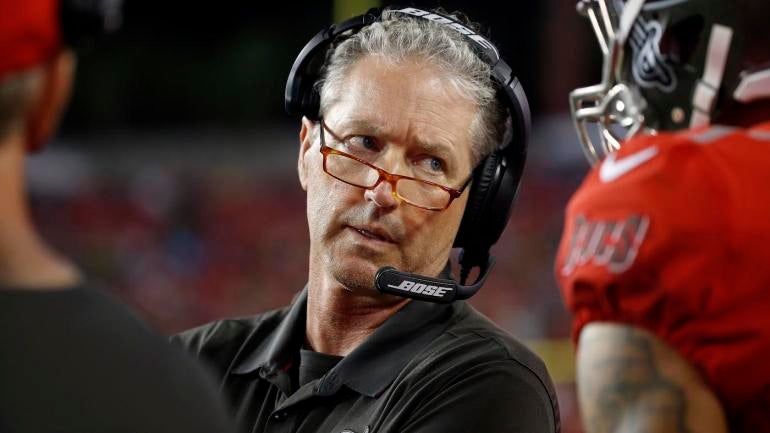
The most recent example was Monday night’s Bucs-Steelers game, which presented itself with the wrong decision on fourth down in both halves by Dirk Koetter. In the first half, with an abominable performance by his quarterback already in the books and down 23-7, the Bucs were faced with a 4th and goal from the 3 with 1:15 to halftime. Much of the analysis went towards the odds of scoring a touchdown over opting for the surefire 3 points, but the real decision here lies with the players off the field.
Facing a veteran QB with two rings, one of which he won with a two-minute drill, the decision really needs to be about what you’ll be giving up on the last drive before halftime. Not only did Koetter give up 4 potential points by giving up a field goal, but with the decision, he handed Roethlisberger the ball with 3 timeouts and 75 seconds on the 25 rather than the 3 if he had failed. As he has done many a time, Ben plowed down the field without much of an issue, and only needed 2 of the 3 timeouts to do it to boot. An eleven point swing from a single bad decision, and a mutually exclusive one from the disastrous quarterback play to boot. They gave up 4 points and lost by 3.
Not to be outdone, Fitzpatrick rallied the Bucs within hailing distance and had a final drive in the 4th quarter to win the game down 30-27. Faced with another 4th down in their own territory with 2:49 to play, essentially a last-ditch effort despite the timeouts they had, Koetter decided now was the time to meekly punt the ball away and rely on the same defense that couldn’t get the job done at the end of the first half to get him the ball back. They didn’t. Final score 30-27. In addition to the “nothing to lose” aspect of going for it here, failing in a way pins Pittsburgh into making decisions they don’t want to make. A punt places them in the middle of the field and opens their playbook. Handing them the ball in your territory almost corners them into playing for a field goal and giving you one more chance to score a TD down 6. In this scenario, you are more likely to get that final drive instead of relying on the defense. Koetter should have conceded the three points in favor of one last drive. It was exceptionally dense of him to get the same call wrong both ways.
Going for it on fourth down based solely on field position and probability of making it is short-sighted and a ticket to revealing yourself not to be in control of your team and the game. Those who advocate for it merely based on the notion of it as an aggressive tactic are swinging their dick in an arena where they’ve never had to make a consequential decision affecting the work of hundreds of co-workers. Firstly, any decision to go for it on fourth down must be made on third down in the same series at the latest, so that the two plays can be complementary to the distance. Fourth down calls made in the moment are almost always subject to emotions in the moment, and thus often doomed. Second, the decision must be contextualized to the clock and the opponent you’re giving the ball to should it fail.
For example, it is often stated that you must pin a high-powered offense deep in their territory and be aggressive on fourth down, as the field goal will only be traded for a touchdown on the other end. A high-powered offense, however, is often able to score from anywhere with the exception of a few yards from their own goal line. Are you willing to trade 3 for 7 and play for more later, or risk 0 for 7 on the wrong end of a gambit? In my eyes, teams are far too often going for it early in the game rather than accruing points for their situational football to be played later. When time becomes a limiting factor on your opponent’s drive, as it did with the Bucs, pinning them deeper does make a difference. Until then, points are good. At least that’s what I hear.
 3rd and 13